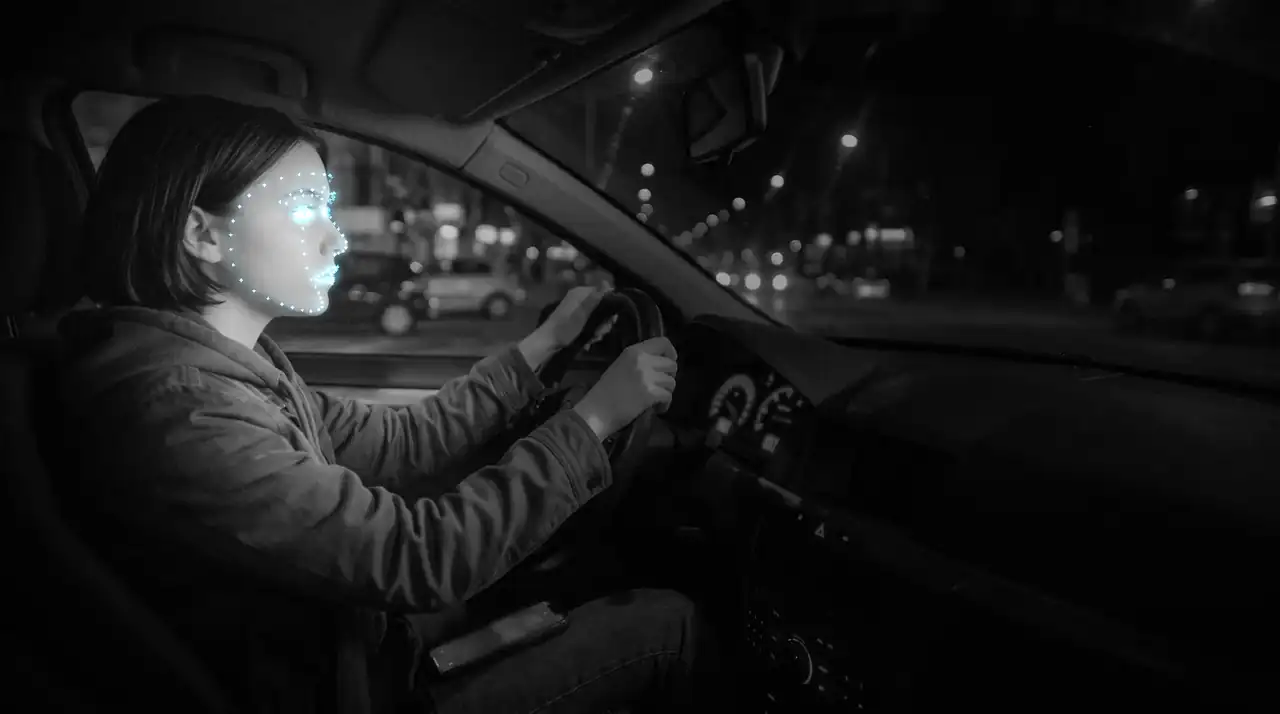
Processed on the device
Face tracking runs inside AutoSight One, or on the phone in the app. Each frame is analyzed in real time, then discarded.
Safety & privacy
A camera pointed at a driver has to earn trust. These are the commitments AutoSight is built around.
Illustration · real face points
Privacy by design
Face tracking runs inside AutoSight One, or on the phone in the app. Each frame is analyzed in real time, then discarded.
AutoSight doesn't record, save, or upload video or photos of anyone.
The only thing that syncs is trip data, like scores, drift times, and drive times, so the family view works.
The family view
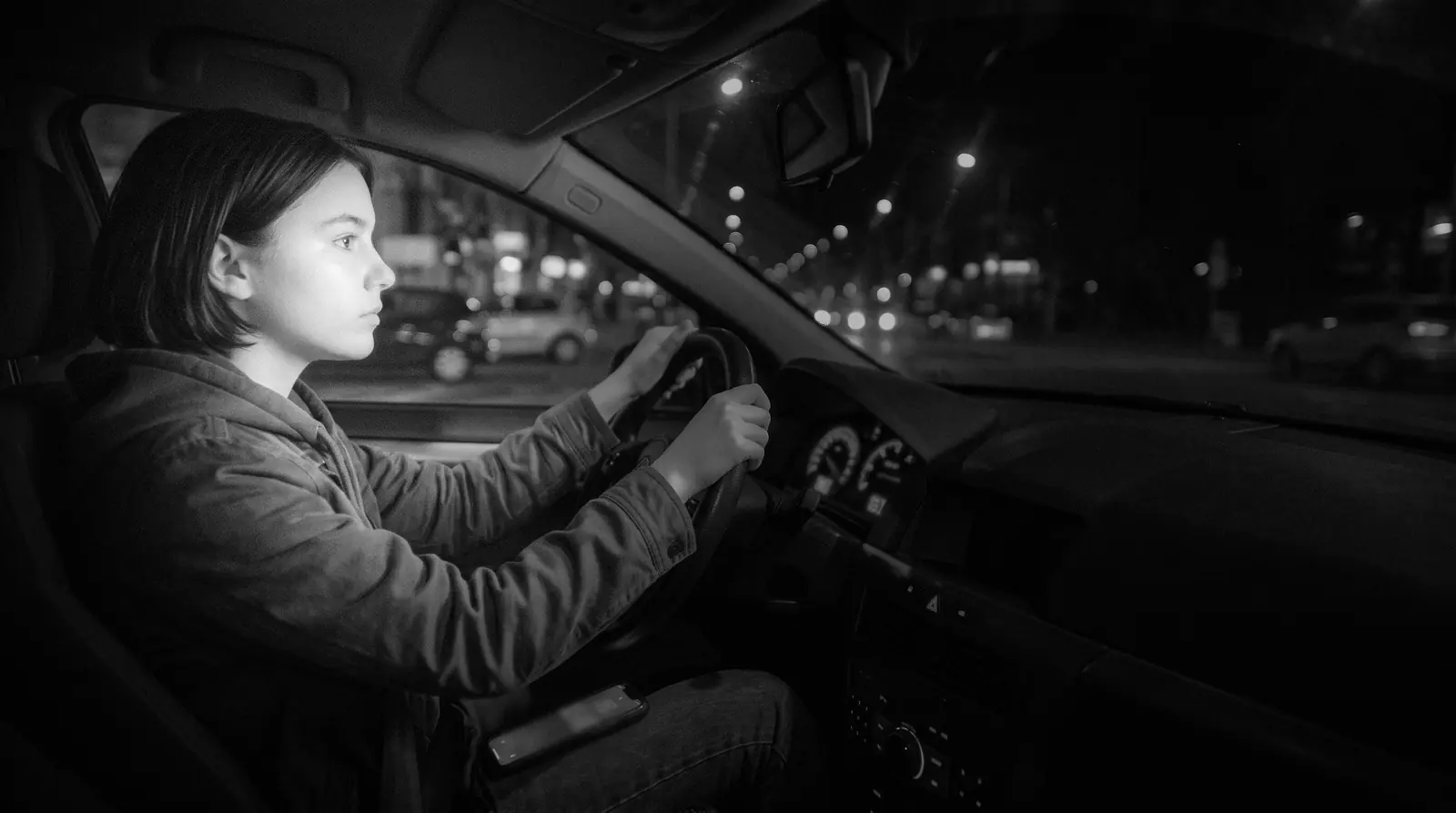
01 · In the car
The camera sees the driver's face in infrared, many times a second.
02 · On the device
Points on the eyes, brows, nose and the outline of the face show where the driver is looking.
03 · Discarded
Each frame is analyzed in memory and discarded. It is never saved or sent anywhere.
04 · Kept
Where attention went, and for how long, becomes a few numbers for the trip: a Focus Score, the drift moments, the drive time. In the app's simulated drive: Focus Score 70, three drift moments, the longest 3.2 seconds.
Illustration · real face points
Responsible driver monitoring
When glare or sunglasses hide the eyes, AutoSight says how sure it is instead of guessing.
Mirror checks and blind-spot looks are good driving. Alerts are built around how long attention stays away, so they mean something when they happen.
One short chime, hands-free. Nothing to read or tap while the car is moving.
We collect the least data the product needs to work, and nothing that could reconstruct what the camera saw.
The driver gets value first: feedback in the moment and a score to beat. Parents see trends, not a feed.
AutoSight can't see the road and can't stop a crash. It helps build the habit of keeping eyes on the road.
Testing
AutoSight's test protocol runs every build through scenarios with known answers. Testing happens in safe, controlled settings before real roads. Pilot drivers under 18 join with a parent or guardian, and no one is ever asked to drive distracted on purpose.
False alerts and missed drift
How fast the alert arrives
Glasses, sunglasses, and partly hidden eyes
Bright sun, low light, and night
Different cars, seats, and camera angles
Heat, power, and a car parked in the sun
Read the full privacy policy, or ask us directly.