Put it on the dash
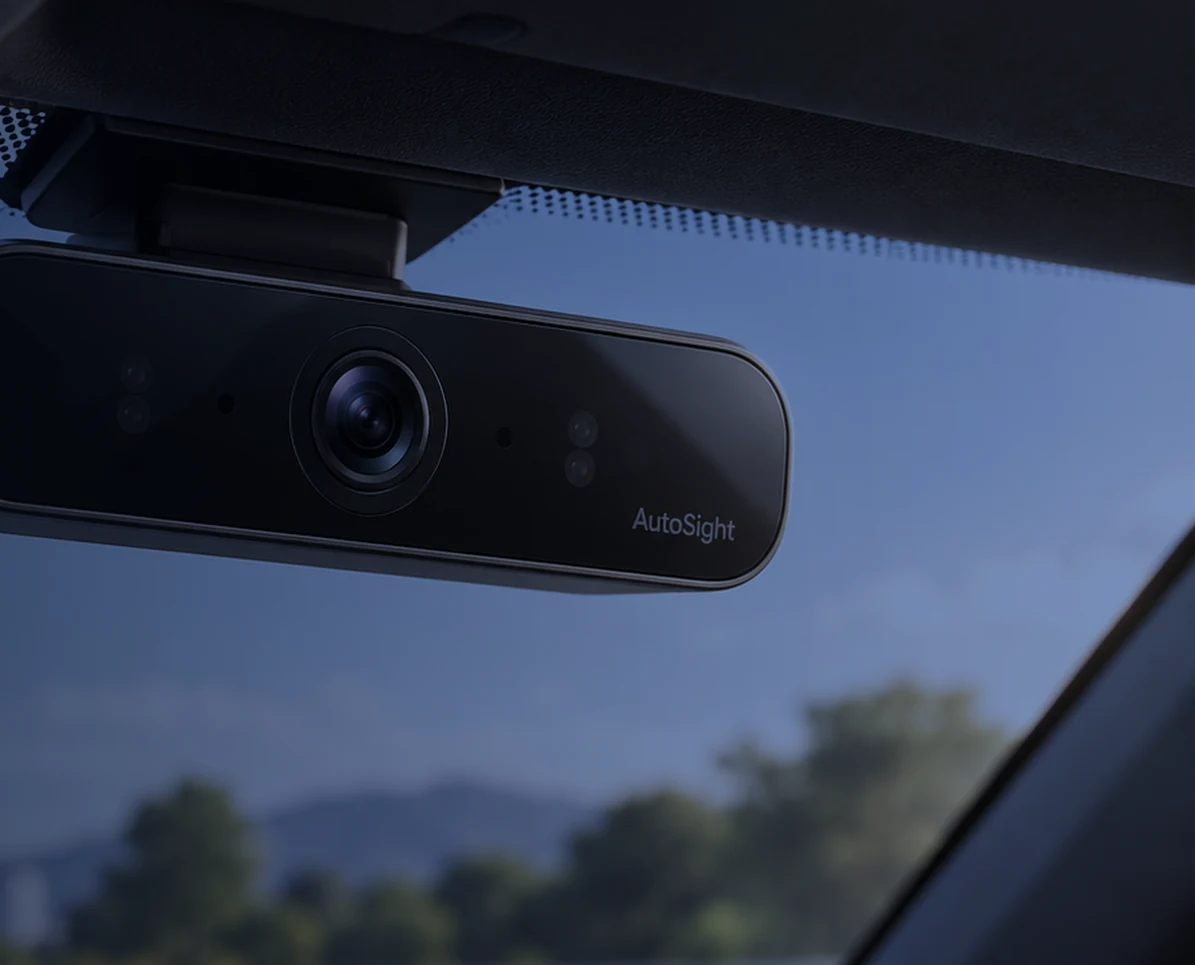
The stand sticks to the dashboard facing the driver, and the hub tucks out of view. Plug it into the 12-volt socket. From then on it starts by itself.
AutoSight One
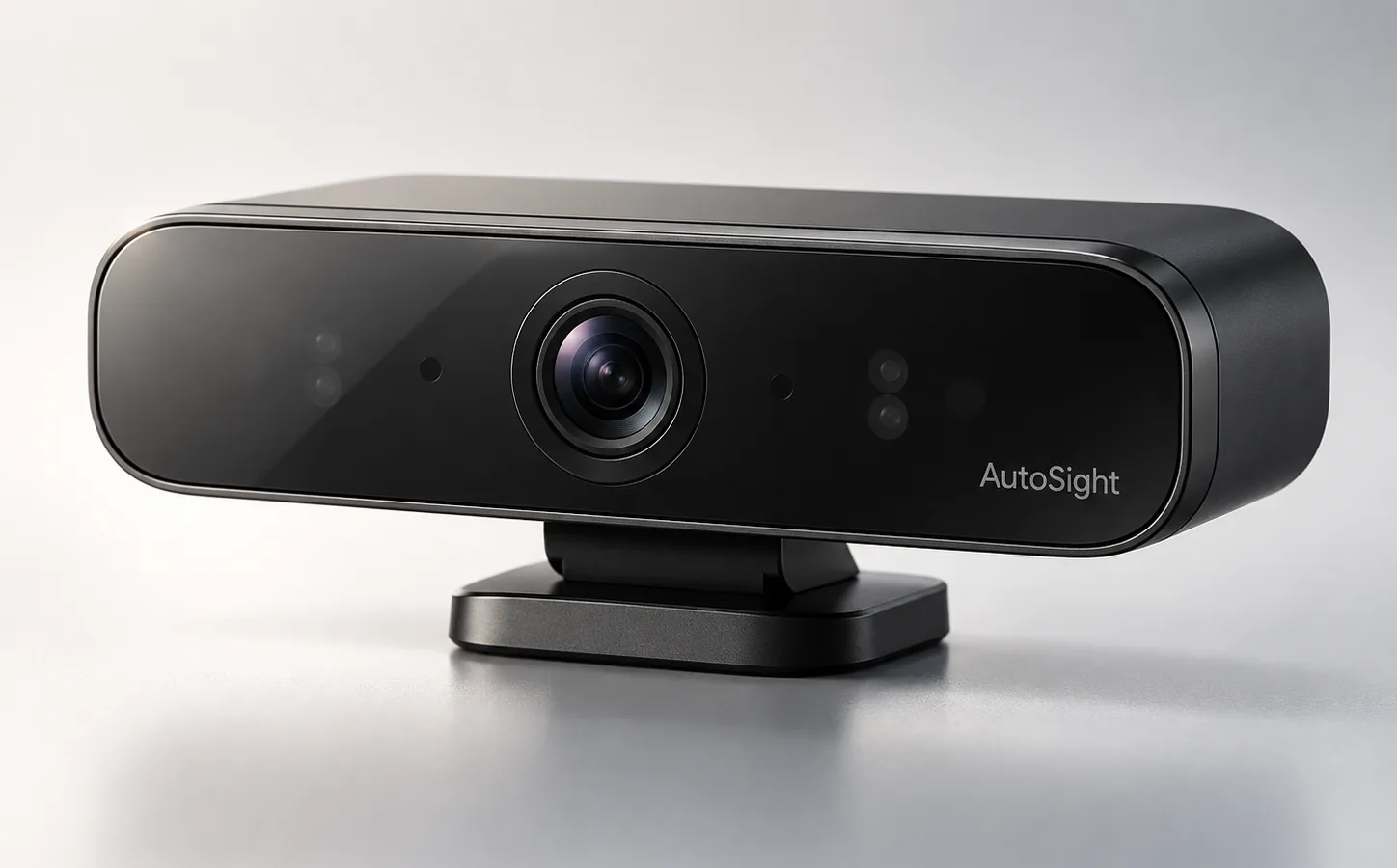
A small infrared camera that faces the driver and chimes when their eyes stay off the road for more than two seconds. It works day and night, keeps no video, and sends a short trip summary to the AutoSight app.
Founding price $129Planned retail $149 · Free to reserve
Reservations openFirst units nextNo video recorded
How it works
The stand sticks to the dashboard facing the driver, and the hub tucks out of view. Plug it into the 12-volt socket. From then on it starts by itself.
The infrared camera follows the eyes, eyelids, and head. Two seconds off the road, or drowsy eyes, and it beeps. A quick mirror check doesn’t.
After you park, the AutoSight app shows a Focus Score and a timeline of drift moments. Patterns, not footage.
The hardware
The app
The AutoSight app is where drives land after you park. It also runs the same attention engine on a phone, so you can try AutoSight today.
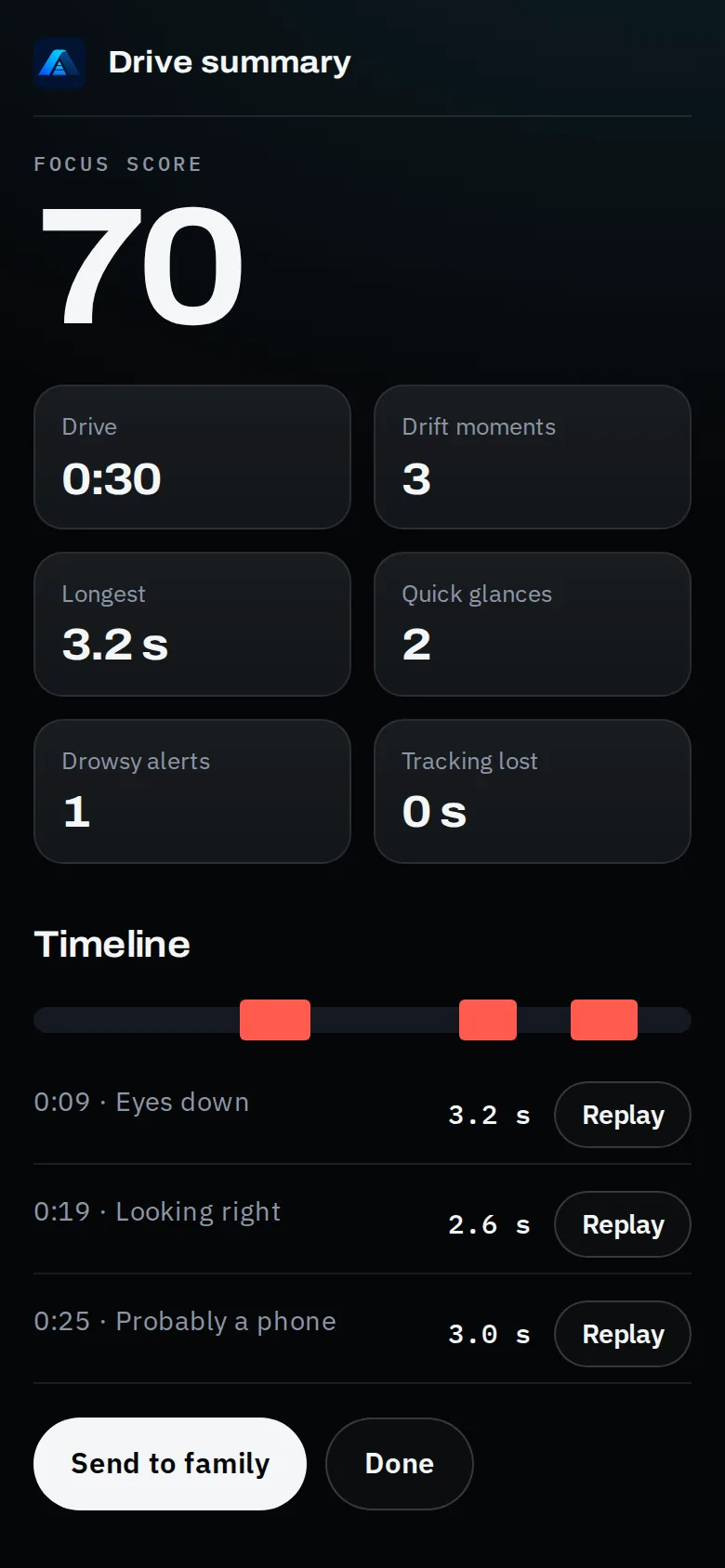
A score to beat next time, and a replay of each drift moment.

Trends parents can read in 30 seconds. Shown with sample data.
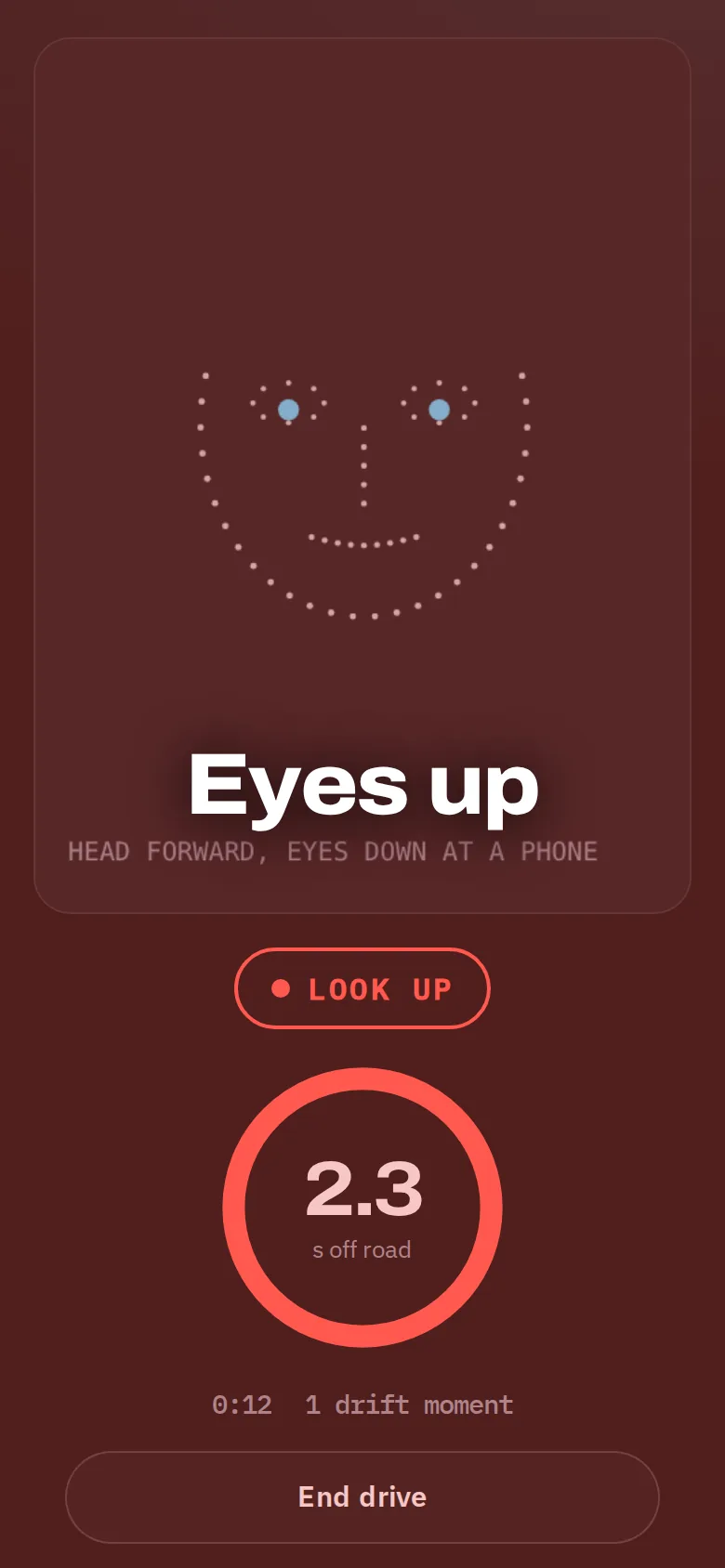
The same engine on a phone’s front camera. Try the live demo.
Real screens from the AutoSight app, running its built-in simulated drive.
Features
Knows when eyes are forward, down, left, or right, and chimes when they stay off the road for more than two seconds.
Watches for long blinks and drooping eyelids, with slower beeps that suggest a break. In NHTSA’s 100-Car study, drowsy driving was linked to four to six times the crash and near-crash risk.[1]
Its own infrared light means a dark cabin isn’t a problem, and many sunglasses let infrared through. When the eyes can’t be read, it says so instead of guessing.
If the camera is covered or can’t find a driver, it gives one long, low beep, and the trip summary says so.
One simple score after every drive, so progress is easy to see and easy to talk about.
See exactly when attention left the road, for how long, and when the alert fired, replayed as an animated face. No video exists to replay.
Trip summaries and trends for parents. Patterns, never footage. See the prototype with a sample month.
Why new drivers
Per mile driven, drivers ages 16 to 19 have a fatal crash rate almost three times that of drivers 20 and older.[2] In video of 1,691 crashes involving drivers ages 16 to 19, the AAA Foundation found the driver was inattentive or engaged in some other non-driving-related activity in 58% of crashes overall.[3]
At 45 mph, two seconds covers 132 feet of road.
Coaching, not surveillance
A calm chime in the moment and a score to beat next time. No video of you, anywhere.
Trip summaries you can read in 30 seconds. Something real to talk about, without reviewing footage.
An objective record of attention on the practice drives between lessons. See how it works for schools.
Questions
No. Each frame from the camera is analyzed inside the unit in real time and then discarded. Nothing is saved or uploaded. AutoSight keeps trip data like scores and drift times, not footage.
AutoSight One, a car with a 12-volt socket, and a phone with the AutoSight app to see trip summaries. Nothing on the phone is needed while driving.
On the dashboard, facing the driver, low enough that it doesn’t block the view of the road and never on an airbag cover. Rules about what can sit on a dashboard vary by state, so check yours. Set it up while parked.
That’s what it’s built for. It lights the driver’s face with its own 940 nm infrared light, which people can’t see, and filters out most other light, so a dark cabin looks much like daylight to it. Many sunglasses let infrared through; some don’t. When it can’t read the eyes, it says so, and the trip summary shows it.
Yes. The AutoSight app runs the same attention engine with a phone’s front camera. Mount the phone facing the driver where your state allows, set it up while parked, and don’t handle it while driving. The camera adds infrared for night and sunglasses, and leaves the phone alone.
No device can do that. AutoSight is a coaching tool that helps new drivers build the habit of keeping their eyes on the road. It’s not a substitute for attentive, lawful driving.
AutoSight is designed as a coach. It’s a camera that keeps no pictures: drivers get a quick nudge in the moment and a score to beat next time, and there’s no footage for anyone to comb through.
We don’t quote a single accuracy number. Pilot testers run a 90-second guided test while parked, and we’ll share the results as counts with ranges, by glance type and condition, once enough people have taken it. The Technology page explains how the test works.
The design is finished, and building the first units is next. The planned retail price is $149, and everyone who reserves before AutoSight One goes on sale gets the founding price of $129. Reserving is free on this page, and pilot families are first in line for the camera.
Pilot families start with the app. Testing starts in safe, controlled settings before any testing on real roads, and a camera goes into a pilot car only after it passes our parked-car checks. Every participant reads the pilot participant notice (linked in the footer) before the first drive, and drivers under 18 join with a parent or guardian’s signed consent.
Reserve
Free to reserve, with no payment and no commitment. Reserve before AutoSight One goes on sale for the $129 founding price (planned retail $149). Before you pay anything, we’ll email you to confirm the price and ship date.
In the Triangle area of North Carolina? Tick the box to join our pilot too: pilot members start with the app, are first in line for the camera, and get a direct line to the founder. Under 18? Ask a parent or guardian to sign up for you. Before the first drive, every pilot participant reads the pilot participant notice.